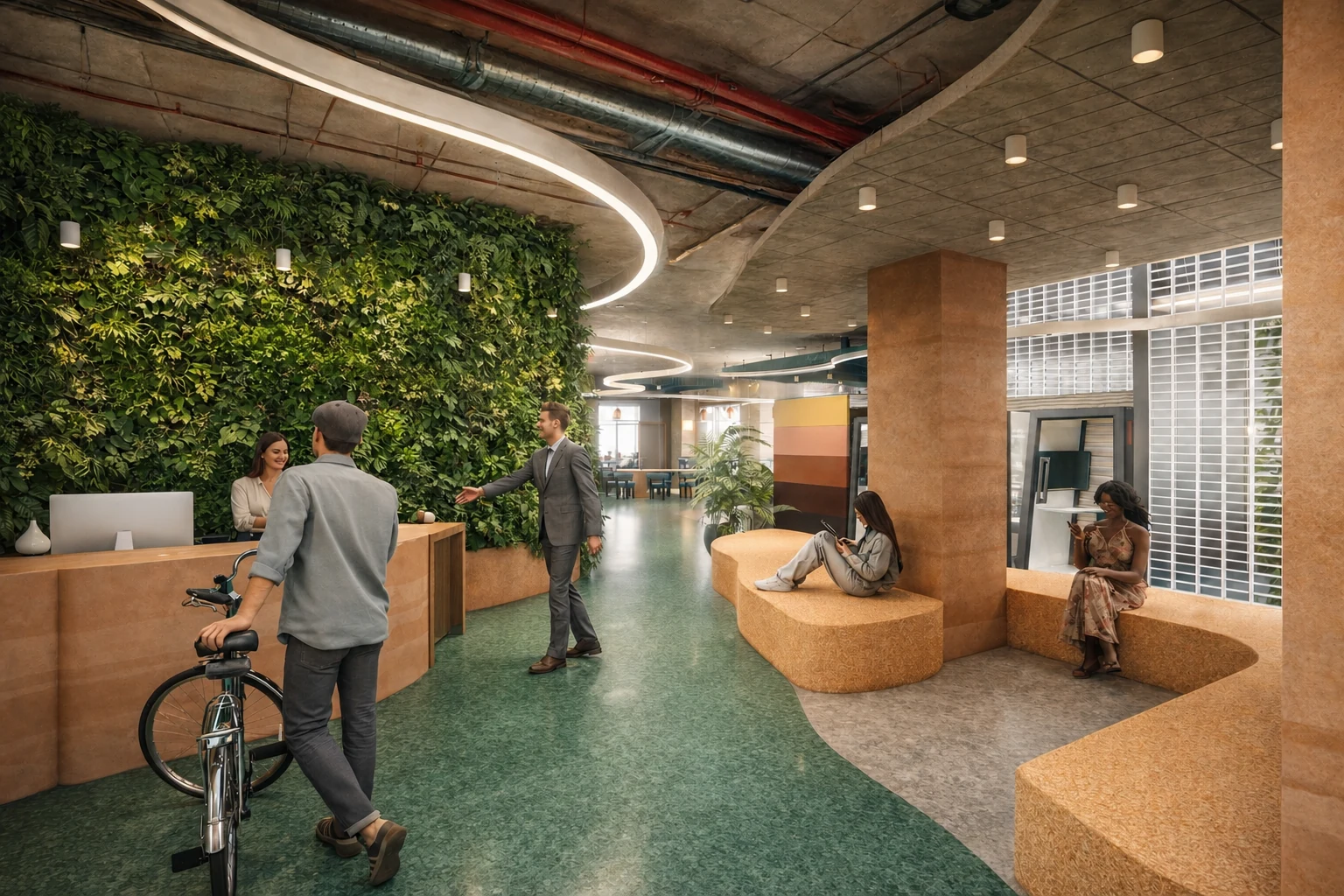
LEED — Leadership in Energy and Environmental Design — is the most-recognised green building certification in the world. It’s run by the U.S. Green Building Council (USGBC) and administered by Green Business Certification Inc. If you’ve walked past a building lobby with a plaque that reads “LEED Platinum,” you’ve seen the highest tier of a points-based assessment that’s been used since 1998.
It’s also a system whose strengths and limits are worth knowing if you’re going to be impressed by the plaque.
How it works
Buildings earn points across seven (or so) credit categories: sustainable sites, water efficiency, energy and atmosphere, materials and resources, indoor environmental quality, innovation, and regional priority. The total determines the certification level:
- Certified — 40–49 points
- Silver — 50–59 points
- Gold — 60–79 points
- Platinum — 80+ points
Different rating systems exist for new construction, existing buildings, interiors, neighbourhoods, and homes. The framework you see most often in commercial work is LEED v4.1 BD+C for new construction, or LEED v4.1 ID+C for interiors-only projects — the latter being the one most interior designers actually use.
What LEED is good at
- Setting a floor. A LEED Certified building is, by definition, doing better than code-minimum on energy, water, and indoor air quality. The bar isn’t high — but it’s a real bar, independently verified
- Common vocabulary. A LEED-trained architect, contractor, and owner can talk about the same things using the same terms. The shared language is itself useful
- Pulling weak credits. Daylighting, low-VOC finishes, FSC wood, water-conserving fixtures — LEED creates market demand for these on every project that pursues the rating, even when the design team wouldn’t have specified them otherwise
- Documentation. A LEED-certified project has a paper trail. You can look up its energy model, material declarations, and commissioning report. Most non-certified buildings have none of that
What LEED misses
Critiques of LEED are well-rehearsed in the industry. The main ones:
- Operational vs measured performance. LEED rates the design. A building can be certified Platinum on paper and use more energy in practice than a code-minimum equivalent because of how it’s actually run. The newer LEED Arc platform addresses this, but most certifications still rest on the design intent rather than measured outcome
- Embodied carbon historically underweighted. Until recent versions, LEED gave many more points for operational energy than for the carbon emitted during construction. A glass-and-steel tower with high operational efficiency could outscore a low-carbon timber building. The v4 and v5 frameworks correct for this, but legacy certifications reflect the older priorities
- Point-shopping. Teams can earn the threshold by picking the cheapest, most administratively convenient credits rather than the ones that matter most for the building’s context. A bike rack and a low-flow toilet count toward the same total as a fully passive envelope
- Geographic bias. LEED was developed in the United States and reflects American climate, code, and material assumptions. The regional adaptations exist but are uneven
LEED, WELL, Living Building — which is which
Three certifications you’ll hear about, in plain terms:
LEED — the broad standard. Rates a whole building against environmental criteria. The most widely used; the most administratively familiar.
WELL — rates a building’s impact on the people inside it. Air, water, nourishment, light, fitness, comfort, mind. Often paired with LEED on the same project. The standard interior designers should care about most.
Living Building Challenge — the most rigorous. Net-positive on energy and water, plus an ingredient “Red List” that bans hundreds of common construction chemicals. Comparatively few projects achieve it; the ones that do are the gold standard.
What it means in practice
A LEED Gold or Platinum plaque is a meaningful signal. It tells you the project team made a real effort, documented their choices, and met an independent benchmark. It does not tell you the building is the best example of sustainability available, or that its embodied carbon is low, or that its occupants are happier than they would be in a code-minimum building down the road.
Treat it the way you’d treat any third-party signal — as a starting point for what to ask next, not the end of the conversation.