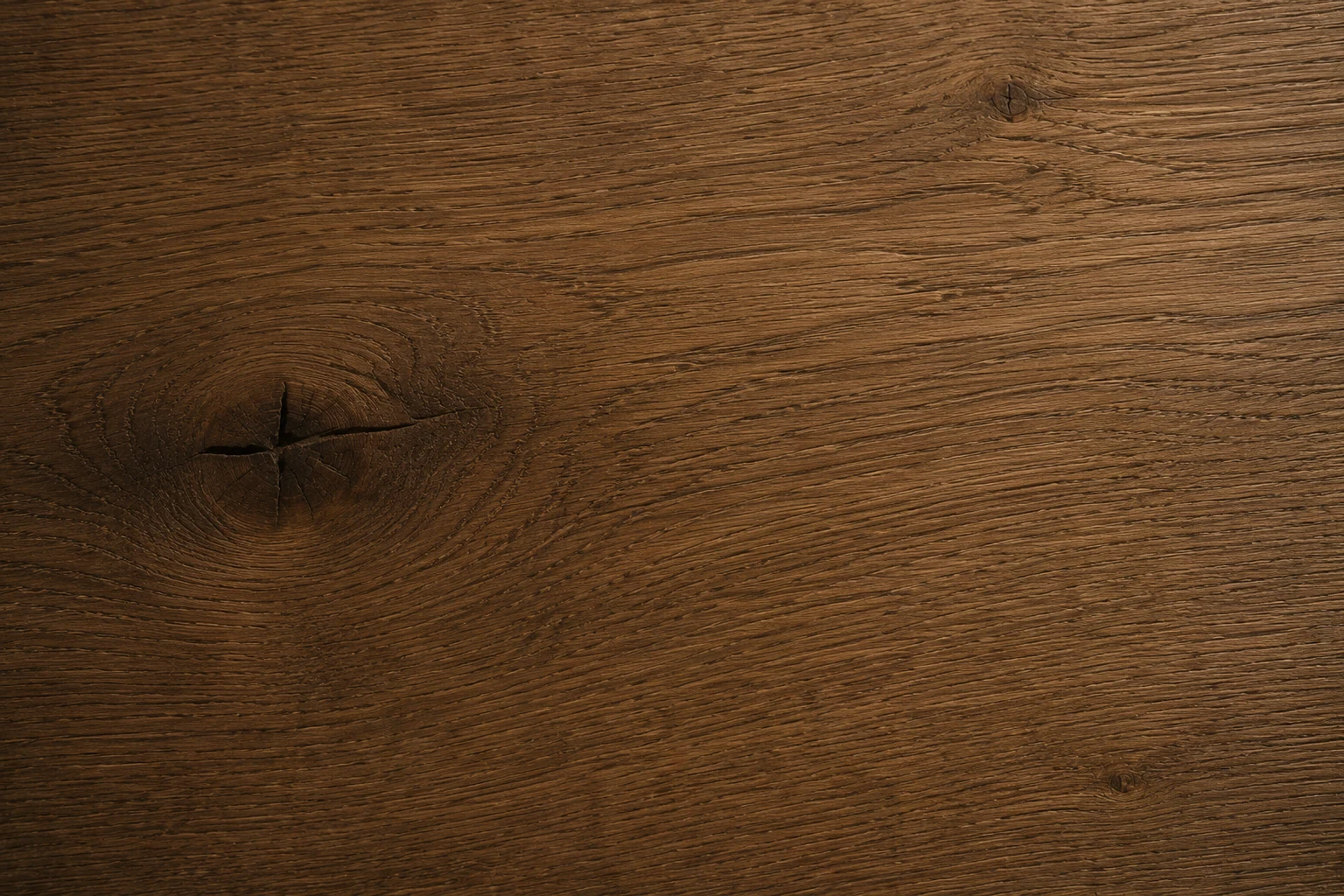
Wood is the only structural building material we use that the planet makes for us. It grows by pulling carbon out of the atmosphere and storing it in trunks; we cut a fraction of those trunks down, mill them, and put them in walls and floors. As long as the carbon stays locked in the wood and the forest replaces what we took, the material is, in net terms, a carbon sink that costs essentially nothing in fossil energy.
As long as.
Three sources, three ledgers
Almost any wood you spec falls into one of three categories. Each has a different sustainability profile.
Reclaimed wood. Salvaged from old buildings, barns, factories, ships. The carbon was sequestered decades or centuries ago; the embodied energy of milling is already paid; the alternative use is landfill or burning. Reclaimed wood is, by an unusually wide margin, the cleanest interior timber you can buy.
FSC-certified virgin wood. Newly harvested from a forest managed under the Forest Stewardship Council framework — cuts are below replacement rate, riparian zones protected, biodiversity maintained, workers paid fairly, indigenous rights respected. The certification is independently audited. Imperfect, but the most credible signal available that the wood came from a forest that will still be a forest.
Conventional or uncertified wood. Could be sustainably managed; could be illegally cut from a primary rainforest. There’s no way to tell from the plank. INTERPOL and the UN Environment Programme have repeatedly documented illegal timber laundering through the supply chain. The plank is innocent-looking; the forest it came from may not be.
The case for reclaimed
A reclaimed oak plank from a nineteenth-century barn has properties newly cut wood can’t replicate:
- Old-growth density. Trees that grew slowly over a century in unmanaged forest produce denser, tighter-grained wood than fast-grown plantation timber. The plank is harder, more dimensionally stable, less prone to cupping
- Pre-aged stability. A century of seasoning means the wood is finished moving. It will not shrink, expand, or twist meaningfully in your house
- Patina. The visible history — old nail holes, saw marks, oxidation — reads as character that new wood spends fifty years acquiring
- Carbon paid up front. The embodied carbon of the original harvest was paid decades ago. Reclaiming it is, in net terms, a carbon-negative material decision
The trade-off is supply. Reclaimed wood is dimensionally inconsistent, comes in limited batch sizes, and costs roughly the same as premium new oak. For most projects, you order what’s available, design around the dimensions, and accept that the floor won’t be perfectly uniform. That irregularity is the material’s authenticity, not its flaw.
The case for FSC virgin wood
When reclaimed isn’t available in the quantity needed — large projects, structural use, specific species — FSC virgin timber is the next-best option. The case rests on three things:
- Independent third-party audit of the forest, not a manufacturer self-declaration
- Chain-of-custody tracking from the forest to the mill to the supplier, with a unique certificate number on the invoice
- Active maintenance of forest biodiversity, including primary-forest exclusion zones and species protection
PEFC (Programme for the Endorsement of Forest Certification) is a parallel system, more dominant in continental Europe. It is generally considered slightly less stringent than FSC; for studios choosing one, FSC is the safer default.
Where wood goes wrong indoors
Three failure modes worth naming.
Engineered wood with formaldehyde glues. Most engineered hardwood flooring, MDF, particleboard, and plywood is held together by urea- or phenol-formaldehyde adhesives. The wood is fine; the glue isn’t. TSCA Title VI and CARB Phase 2 set emission limits, but compliance is a floor, not a target. NAF (no added formaldehyde) or natural-binder products are cleaner.
Solvent-based stains and finishes. The wood enters the room clean; the finish coat brings the chemistry in. Hard-wax oil (Osmo, Rubio Monocoat) or natural shellac are dramatically cleaner than conventional polyurethane stains.
Tropical hardwoods without FSC. Teak, ipe, mahogany, wenge. Beautiful, durable, and the species most associated with illegal logging. If a tropical hardwood is essential to the design, FSC certification on the specific shipment is non-negotiable.
What I specify
- Solid timber over engineered wherever the budget allows. If engineered, NAF or natural-binder construction only
- Reclaimed first, FSC virgin second, conventional never. The order is rigid; the source of the wood determines almost everything else about the spec
- European oak as the default for floors — broadly available FSC, locally sourced for European projects, dimensionally well-behaved, ages beautifully
- Hard-wax oil or natural shellac as the surface finish. Pre-finished planks only if the manufacturer documents a water-based, low-VOC coating
- For cabinetry: solid wood faces and frames, with NAF plywood or PureBond (soybean-binder) plywood for box construction. MDF only for non-visible substrate components, and only NAF-grade
- Tropical hardwoods only with FSC certificate of origin attached to the order
The forest in the floor
A well-specified wood floor is a piece of forest that’s spent a century or two storing atmospheric carbon, now lying horizontally in a room where it will stay for another century. The forest grew it for free. The mill milled it once. After that, every year the floor is in service is a year the carbon stays out of the atmosphere.
That math is what wood is for. The math only works if the forest replaces what we took.
Read the certification. Then walk on the floor.