A newborn breathes about forty times a minute. The lungs are still developing. The blood-brain barrier is not yet at adult competence. The body weighs four kilos and processes the entire chemistry of the room it’s in at a rate, per kilogram, that an adult never approaches.
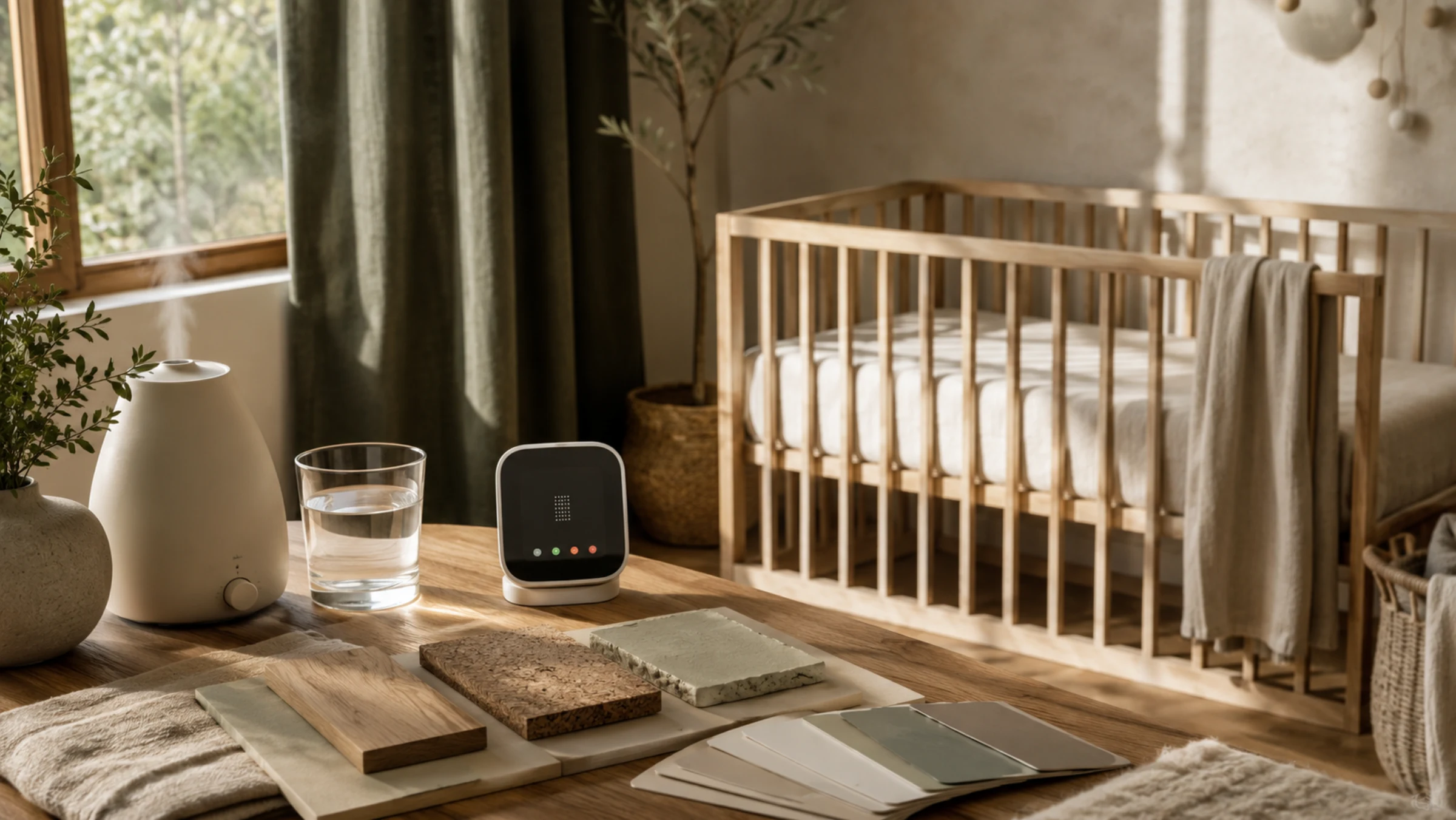
A nursery isn’t a decorating brief. It’s a small, ventilated, low-toxin enclosure built to receive that body.
Most rooms designed for babies don’t reflect that. The default lookbook for a nursery is fresh paint, peel-and-stick wallpaper, soft new carpet, plush textiles, plug-in air freshener for “baby smell.” Every one of those items is a question worth asking specifically.
This is a working checklist for spec’ing a nursery from scratch, or auditing one already in progress.
Paint
Zero-VOC water-based interior paint, applied at least four weeks before the baby arrives, in a room ventilated continuously throughout the cure. Greenguard Gold certification or equivalent third-party testing on the can. Avoid “low-VOC” without certification — the term is unregulated.
If the building is older than 1978 (US) or 1960 (much of Europe), test for lead before any sanding or stripping. See a renovation during pregnancy.
Walls beyond paint
Clay or lime plaster, where the budget allows. They are the only finish that combines low toxicity with humidity regulation, which a small enclosed bedroom benefits from. See on clay plaster.
Avoid vinyl wallpaper categorically. Conventional vinyl contains phthalates, off-gasses for years, and traps moisture against the wall behind it — a mould risk. If you want pattern, look for paper-based wallpapers with water-based, low-VOC inks and a wheat-paste or methylcellulose adhesive. The roll’s back will say.
Mattress & crib
A natural-latex GOLS-certified or organic-wool mattress, GOTS-certified cotton ticking, no chemical flame retardants. See what’s in your mattress — the same logic applies, more so. A baby spends sixteen-plus hours a day on this surface.
For the crib itself: solid hardwood, not pressed-wood (MDF, particleboard, plywood) with formaldehyde-based adhesives. If pressed-wood is unavoidable for cost reasons, look for CARB Phase 2 or TSCA Title VI compliance on the spec sheet, and let the crib air out in another room for two weeks before assembly in the nursery.
Avoid: anything painted in a colour that wasn’t the manufacturer’s factory finish (refinished/repainted antique cribs are a frequent lead-paint risk), drop-side cribs (banned in the US for safety reasons in 2011), used mattresses (mattress reuse has been associated in some research with elevated SIDS risk).
Floor
Hard floor over wall-to-wall carpet, almost always. Carpet is a sink for dust, dust mites, dander, and VOC residues from the adhesives that hold it down. If you want softness, a washable natural-fibre rug (wool, cotton) on top of hard floor — one you can lift, shake out, and machine wash.
If carpet is non-negotiable: a natural-fibre low-pile wool, installed with mechanical fixings rather than solvent adhesives, on a natural-fibre underlay. Run a HEPA vacuum on it weekly.
For hard floors themselves: solid wood, cork, or natural linoleum. Avoid vinyl plank (LVT, LVP) in a nursery — the phthalates that make it flexible are the exact category of chemistry you don’t want a small body to crawl on for two years.
Furniture, soft furnishings, toys
- Wood furniture: solid wood with natural oil or wax finish. FSC-certified where available. Avoid stained-and-lacquered fast-furniture pressed-wood
- Textiles: GOTS-certified organic cotton for bedding, swaddles, sleep sacks. Linen, hemp, and wool are equally good. Avoid polyester sheets and synthetic plush
- Curtains: blackout shutters or unbleached cotton/linen curtains. The room needs to go properly dark for daytime naps
- Toys: solid wood, beeswax-finished, untreated cotton or wool soft toys. Plastic toys should be PVC-free and phthalate-free (look for marking; in the EU, conformity is regulated)
Air
Operable window. This is essential, not optional. The room needs to be airable at least once a day.
A standalone HEPA + activated-carbon air purifier sized for the room, running continuously on low. It helps during the first six months while new finishes finish off-gassing, and continues to reduce dust and allergens afterward.
A hygrometer on the wall. Keep the room between 40% and 60% relative humidity. See mould is a humidity problem.
No plug-in air fresheners. No fragranced wax warmers. No reed diffusers. The room should smell of fabric and clean air. The AAP and various pediatric pulmonologists are consistent on this point.
Light
No overhead light if you can avoid it. Two table lamps or sconces on dimmers, 2700K, with the bulb itself never visible from the changing table or crib. Babies blink and recoil from a bare bulb in their direct field of view.
A blackout shutter or roller blind, not just a curtain, for daytime naps. If the room never goes properly dark, the baby’s circadian rhythm has nothing to anchor to. See the blue light at 10pm.
Plants
A few large, non-toxic, low-maintenance plants are a positive addition — a parlour palm, a Boston fern, a Chinese money plant. The effect is partly biophilic (see the biology of a biophilic room) and partly humidity-buffering.
Avoid known toxic species at reachable height: oleander, peace lily, dieffenbachia, philodendron, sago palm. The ASPCA toxic plant list is a good cross-reference (the toxicology overlaps with toddlers more than people expect).
The full one-page checklist
- Zero-VOC paint, applied four weeks pre-arrival, room ventilated continuously through cure
- Clay or lime plaster on at least one wall, where budget allows
- Paper-based wallpaper with water-based inks if used at all; no vinyl wallpaper
- GOLS-certified natural-latex mattress; GOTS-certified cotton ticking; solid hardwood crib; no pressed-wood with formaldehyde glues
- Hard floor (solid wood, cork, natural linoleum) over wall-to-wall carpet; washable natural-fibre rug on top
- Solid-wood furniture, oil or wax finish; FSC where available
- GOTS-certified organic cotton, linen, wool textiles; no polyester sheets; no plush synthetic toys at sleeping age
- Operable window; HEPA + carbon purifier on low; hygrometer 40–60% RH
- No plug-in fresheners, no fragranced products, no reed diffusers
- Two dim, warm lamps (2700K) on dimmers; no bare overhead; blackout shutters or shades
- Non-toxic, large, low-maintenance plants; nothing toxic at reachable height
- Lead test if pre-1978 (US) or pre-1960 (EU) construction
The room as the first environment
A baby will spend ninety percent of their first year inside this room. Their developing immune system, microbiome, and respiratory tissue are negotiating with whatever the air and surfaces present.
A well-specified nursery isn’t a precious one. It looks calm, slightly under-decorated, and a little plain. The plainness is the point. There’s nothing in it that shouldn’t be in it.
Then you bring the baby home, and the room does its job.